Blog / Operations
9 signs your business has outgrown Excel and QuickBooks
The tools that got you here are not the tools that get you out of the office at five. Here is how to tell.
8 October 2026 · 9 min read
Short answer: you have outgrown your tools when the same number is typed in more than one place, when nobody can tell you today's cash without a day's notice, and when the business stops the moment one person is on leave. Any one of these is a nuisance. Three of them together is a tax on your growth.
Excel and QuickBooks are brilliant starters. They are cheap, everyone knows them, and they get the first invoices out. The trouble is that a growing company is not one spreadsheet. It is sales, stock, money, people and sometimes trucks, all moving at once, and starter tools only see one of those at a time.
The nine signs
1. You type the same thing twice
The order goes into the sales sheet, then the invoice goes into accounting, then the delivery goes into the logistics group chat. Every copy is a chance for a typo and every typo is an hour of hunting later.
We have three versions of the truth and I spend Friday deciding which one to believe.
2. "How much cash do we have?" takes a day
If the answer means logging into the bank, opening the MoMo merchant statement, checking the Airtel wallet and asking the accountant, you do not have a number. You have a project.
3. Month end eats a week
Closing the books should be a check, not an excavation. If your accountant spends the first ten days of every month rebuilding last month, the books are always late and every decision is made on old numbers. See our month end close checklist.
4. One person holds the whole company in their head
When she is sick, invoices stop. When he leaves, nobody knows which supplier is paid. A business that lives in one head cannot grow past that head.
5. Tax time is panic time
VAT, PAYE and RSSB all fall due around the same date every month. If preparing them means collecting receipts from drawers and WhatsApp, you are one lost EBM receipt away from a rejected expense. More on that in why RRA rejects your expenses.
6. You run two companies and two of everything
A second company, a sister business or a subsidiary usually means a second file, a second login and a second set of reports you add up by hand.
7. Departments pass work by phone call
Sales closes a deal and calls operations. Operations finishes and messages finance. Every handover is a place where work waits, and nobody can see where it is waiting.
8. You cannot answer a simple question without a spreadsheet
"Which clients owe us more than 30 days?" "What did fuel cost per truck last quarter?" If each answer needs someone to build a pivot table, the questions stop being asked.
9. You are the last one to leave, every day
This is the real sign. Tools are supposed to give you time. If the business only runs because you stay late stitching it together, the tools are running you.
What to move to (and what to avoid)
The usual next step is an ERP: one system where every department works on the same records. The usual fear is just as real. Big ERPs are known for implementations that cost more than the licence, consultants for every change, and a year before anyone feels the benefit.
| Spreadsheets and starter apps | Heavy enterprise ERP | KromaOS | |
|---|---|---|---|
| Time to first value | Today | Months | An afternoon |
| Same record across departments | No | Yes | Yes |
| MoMo and Airtel Money | By hand | Custom work | Built in |
| EBM, VAT, PAYE, withholding | By hand | Local partner | Built in for Rwanda |
| Several companies, one login | Separate files | Extra licences | Included |
| Change how work flows | Rebuild the sheet | Pay a consultant | Draw it yourself |
A day, after
What Tuesday looks like after the move
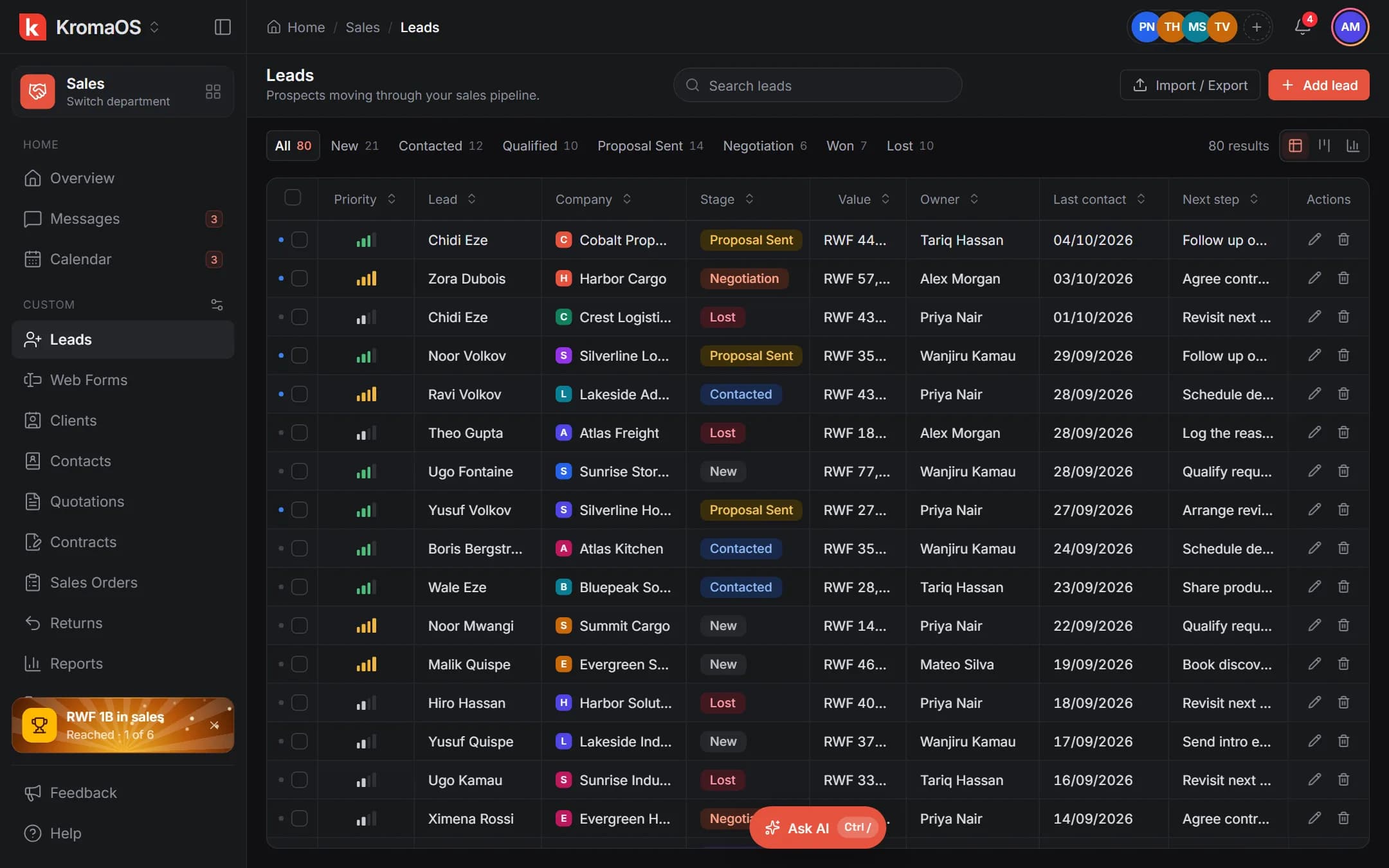
- 07:45Coffee. Open the Overview on your phone: cash across bank, MoMo and Airtel, what is overdue, what came in overnight.
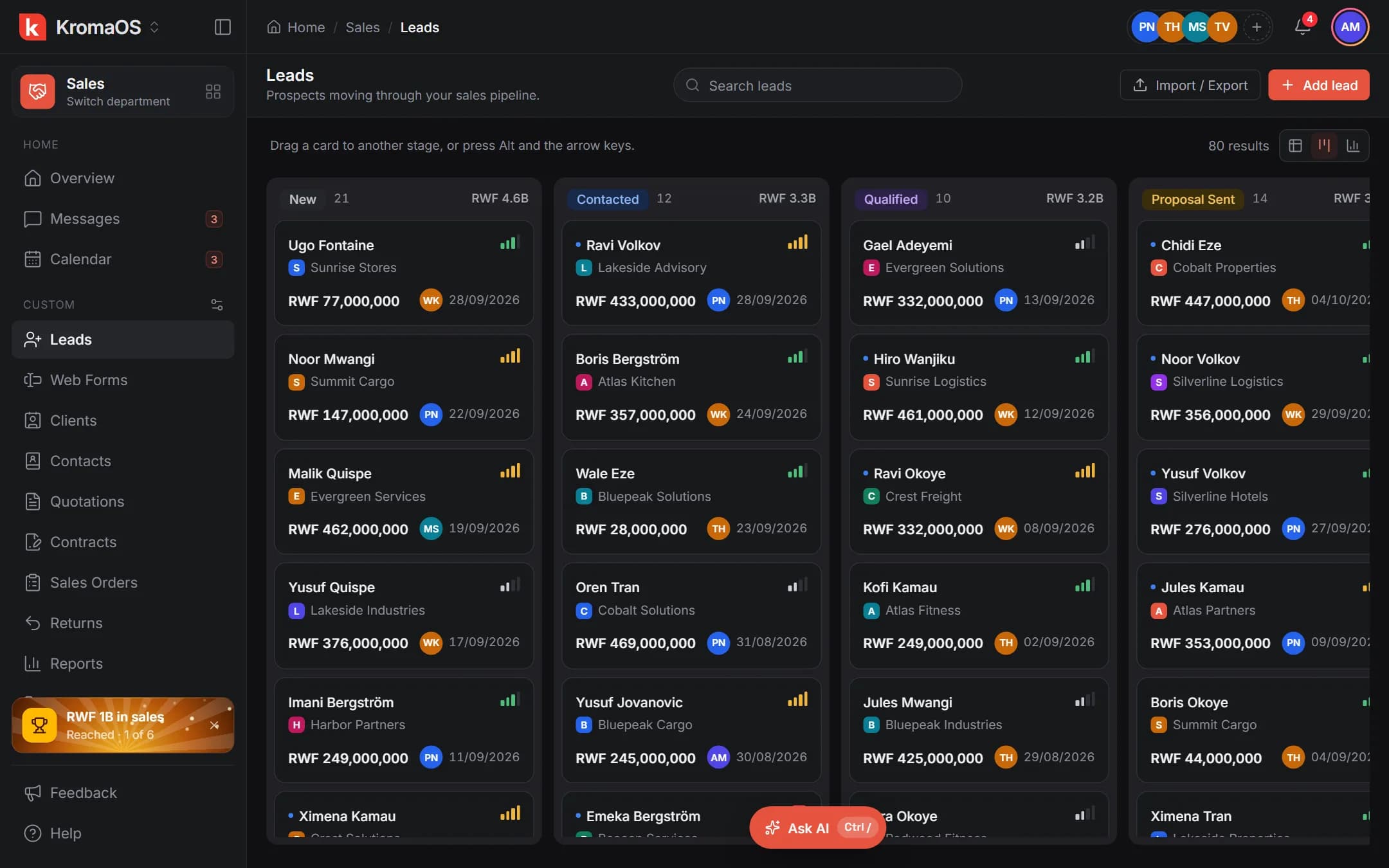
- 09:00Sales confirms two orders. Operations already has them in Incoming. You did not forward anything.
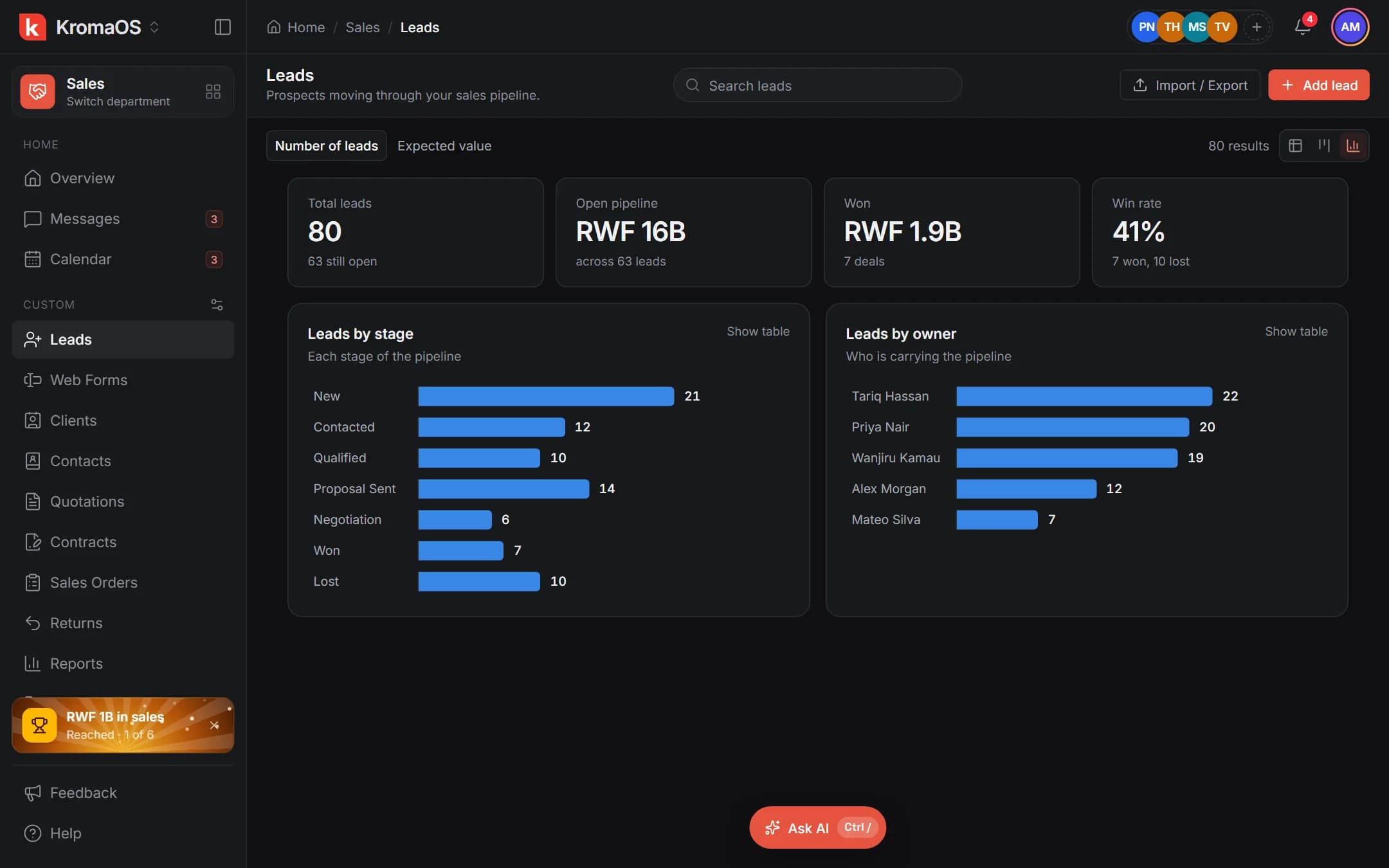
- 13:00Ask the assistant "who owes us more than 30 days?" and get a table, not a promise.
- 16:30VAT is ready to review because every invoice already carries its EBM receipt.
- 17:00You leave. The business does not need you to stay and hold it together.
Before you switch, write down
- Every place a sale is typed today
- Every account money arrives in (bank, MoMo, Airtel, cash)
- Who hands work to whom, and how they tell each other
- The five questions you wish you could answer in a minute
Questions people ask
Is QuickBooks an ERP?
No. QuickBooks is accounting software. An ERP also covers sales, stock, purchasing, people and operations on the same records, so departments stop re-typing each other's work.
How big does a business need to be for an ERP?
Size matters less than complexity. A ten-person company with stock, a fleet and two bank accounts often needs one sooner than a fifty-person consultancy.
Can I keep my old data?
Yes. KromaOS imports clients, products, suppliers and opening balances from CSV, so you start with your history rather than a blank page.
How long does switching take?
Most small teams are working in KromaOS the same week. You pick your industry, the departments are set up for you, and you change what does not fit.
Run the whole business from one place
Sales, books, money, people and trucks in one workspace. Set up in an afternoon, built for how business works in Rwanda.
Get StartedKeep reading